What were the results with TALVEY® (talquetamab-tgvs)?
TALVEY® was studied in the MonumenTAL-1 clinical trial and received an accelerated approval
MonumenTAL-1 was a single-arm trial, meaning that all people who participated received treatment with TALVEY®. The results from the main part of this study, or primary analysis, were shared in 2023 and led to the accelerated approval for TALVEY®.
The trial included 219 people with relapsed or refractory multiple myeloma who had previously been on at least 4 prior lines of therapy, including a proteasome inhibitor, an immunomodulatory agent, and an anti-CD38 monoclonal antibody.
People in MonumenTAL-1 received TALVEY® (talquetamab-tgvs) either once every 2 weeks or once every week.

Unfamiliar with clinical trials or accelerated approvals?
Learn more



>7 in 10 people across all study groups responded to TALVEY®

View more detailed results below
The MonumenTAL-1 clinical trial results below are split into 2 tabs based on participants' previous exposure to CAR-T or bispecific antibody therapies. CAR-T therapy and bispecific antibody therapy are examples of a type of immunotherapy called T-cell redirection (TCR), which engages your T cells to fight cancer.
The first tab shows results for people who had not received CAR-T or bispecific antibody therapy. These people are referred to as being "TCR-naïve." The second tab shows results for a "TCR-exposed" group that had received CAR-T or bispecific antibody therapy before starting TALVEY®.
Use the tabs to see how people with different treatment histories responded to TALVEY®
The clinical trial included some people who had not had any CAR-T or bispecific antibody therapy before starting TALVEY®. Some of these people received TALVEY® once every 2 weeks, and the rest received TALVEY® once every week.
In the 87 people who received TALVEY® once every 2 weeks, after a median* follow-up of 5.9 months:
73.6% responded to treatment
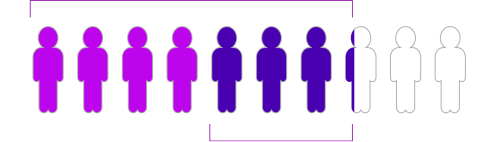
- 25% of people had a very good partial response
- 16% of people had a partial response
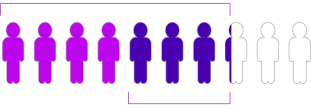
32% of people had a complete response or better
- 25% of people had a very good partial response
- 16% of people had a partial response
32% of people had a complete response or better
How long did the responses last?
- About 85% of people continued responding to treatment for at least 9 months.†
Among the 100 people who received TALVEY® once every week, 73% responded to treatment at a median* follow-up of 13.8 months. Half of these people responded for at least 9.5 months.
You are now viewing data from the longer-term analysis
After the primary analysis of the MonumenTAL-1 trial, the original participants continued to be followed and new people were enrolled. Data were collected from the newly enrolled people and additional data continued to be collected for the original participants.
In 2025, researchers shared results from a longer-term analysis of MonumenTAL-1 that included additional data collected after the accelerated approval. Data from additional trials are required to confirm the clinical benefit of TALVEY®.
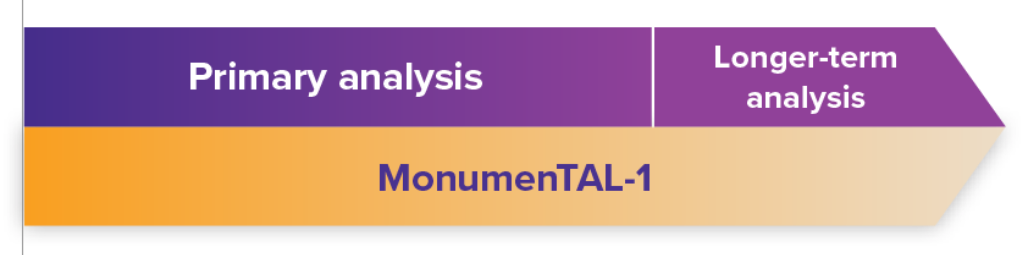
It is important to understand and consider the following limitations when reviewing the longer-term study:
The results of the longer-term analysis only show how people in the trial responded over time and are not included in the current full
. The data were collected after the conclusion of the primary analysis of MonumenTAL-1.These data reflect the number of people who responded to treatment at any point during the trial.
It’s important to note that outcomes from this longer-term analysis may represent results that can be due to chance and cannot be considered conclusive.

No conclusions should be drawn from the results shown in the longer-term analysis as they were not planned for in the primary analysis.
If you have questions about what this may mean for you and to better understand this information, talk to your doctor or healthcare team. They can help you understand how or if it applies to you.
No conclusions should be drawn from the results shown in the longer-term analysis as they were not planned for in the primary analysis.
If you have questions about what this may mean for you and to better understand this information, talk to your doctor or healthcare team. They can help you understand how or if it applies to you.
What were the data from the longer-term analysis?
In the 90 people from the longer-term analysis who received TALVEY® once every 2 weeks and had no prior CAR-T or bispecific antibody therapy after a median* follow-up of >30 months:
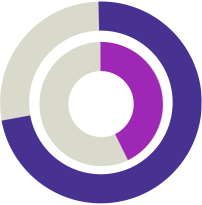
71.1% responded to treatment at any point during the trial
43% had a complete response or better
18% had a very good partial response
10% had a partial response
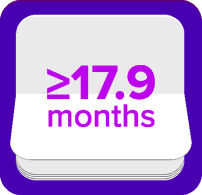
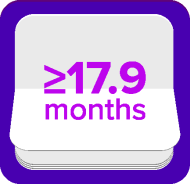
In people who responded to treatment, half of them continued to respond for at least 17.9 months
Among the 100 people from the longer-term analysis who received TALVEY® once every week and had no prior CAR-T or bispecific antibody therapy, 73% responded to treatment at a median follow-up of >37 months. Half of these people responded for at least 10.2 months.
The clinical trial included 32 people who had received prior CAR-T or bispecific antibody therapy before starting TALVEY®.
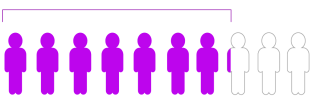
In these CAR-T– or bispecific antibody–exposed people who received TALVEY® once every week, after a median* follow-up of 10.4 months:
72% responded to treatment
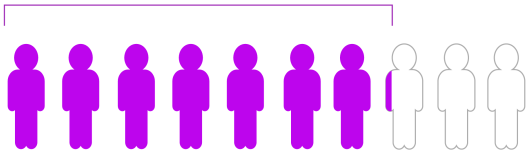

How long did the responses last?
- About 59% of people continued responding to treatment for at least 9 months.
You are now viewing data from the longer-term analysis
After the primary analysis of the MonumenTAL-1 trial, the original participants continued to be followed and new people were enrolled. Data were collected from the newly enrolled people and additional data continued to be collected for the original participants.
In 2025, researchers shared results from a longer-term analysis of MonumenTAL-1 that included additional data collected after the accelerated approval. Data from additional trials are required to confirm the clinical benefit of TALVEY®.
It is important to understand and consider the following limitations when reviewing the longer-term study:
The results of the longer-term analysis only show how people in the trial responded over time and are not included in the current full
. The data were collected after the conclusion of the primary analysis of MonumenTAL-1.These data reflect the number of people who responded to treatment at any point during the trial.
It’s important to note that outcomes from this longer-term analysis may represent results that can be due to chance and cannot be considered conclusive.
No conclusions should be drawn from the results shown in the longer-term analysis as they were not planned for in the primary analysis.
If you have questions about what this may mean for you and to better understand this information, talk to your doctor or healthcare team. They can help you understand how or if it applies to you.
No conclusions should be drawn from the results shown in the longer-term analysis as they were not planned for in the primary analysis.
If you have questions about what this may mean for you and to better understand this information, talk to your doctor or healthcare team. They can help you understand how or if it applies to you.
What were the data from the longer-term analysis?
In the 58 people from the longer-term analysis who received TALVEY® once every week and had prior CAR-T or bispecific antibody therapy after a median* follow-up of >28 months:


72.4% responded to treatment at any point during the trial
50% had a complete response or better
9% had a very good partial response
14% had a partial response
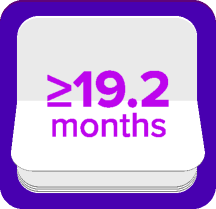
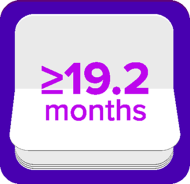
In people who responded to treatment, half of them continued to respond for at least 19.2 months

Below are key reminders of the limitations of the data you just reviewed
It is not yet known whether TALVEY® improves survival or symptoms of multiple myeloma.
It is important to note that some people may have stopped responding to treatment with TALVEY® by the time study results were reported.
No conclusions should be drawn from the results shown in the longer-term analysis as they were not planned for in the primary analysis.
If you have questions about what this may mean for you and to better understand this information, talk to your doctor or healthcare team. They can help you understand how or if it applies to you.

Below are key reminders of the limitations of the data you just reviewed
It is not yet known whether TALVEY® improves survival or symptoms of multiple myeloma.
It is important to note that some people may have stopped responding to treatment with TALVEY® by the time study results were reported.
No conclusions should be drawn from the results shown in the longer-term analysis as they were not planned for in the primary analysis.
If you have questions about what this may mean for you and to better understand this information, talk to your doctor or healthcare team. They can help you understand how or if it applies to you.
*The median is the middle number in a set of numbers. The median is found by taking a set of numbers (in order) and choosing the middle one.
†More than half of the people in this group continued to be on therapy with TALVEY® when data were initially collected. As a result, the median duration of response could not be estimated.
CAR-T, chimeric antigen receptor T-cell; CD, cluster of differentiation; HCP, healthcare provider; REMS, Risk Evaluation and Mitigation Strategy.